
AI-Related Courses
During the 2026–2027 academic year, the Department of Mathematics will offer two new courses exploring the mathematics underlying machine learning and artificial intelligence. Brief descriptions of the courses appear below. Additional offerings are in the works for future years.

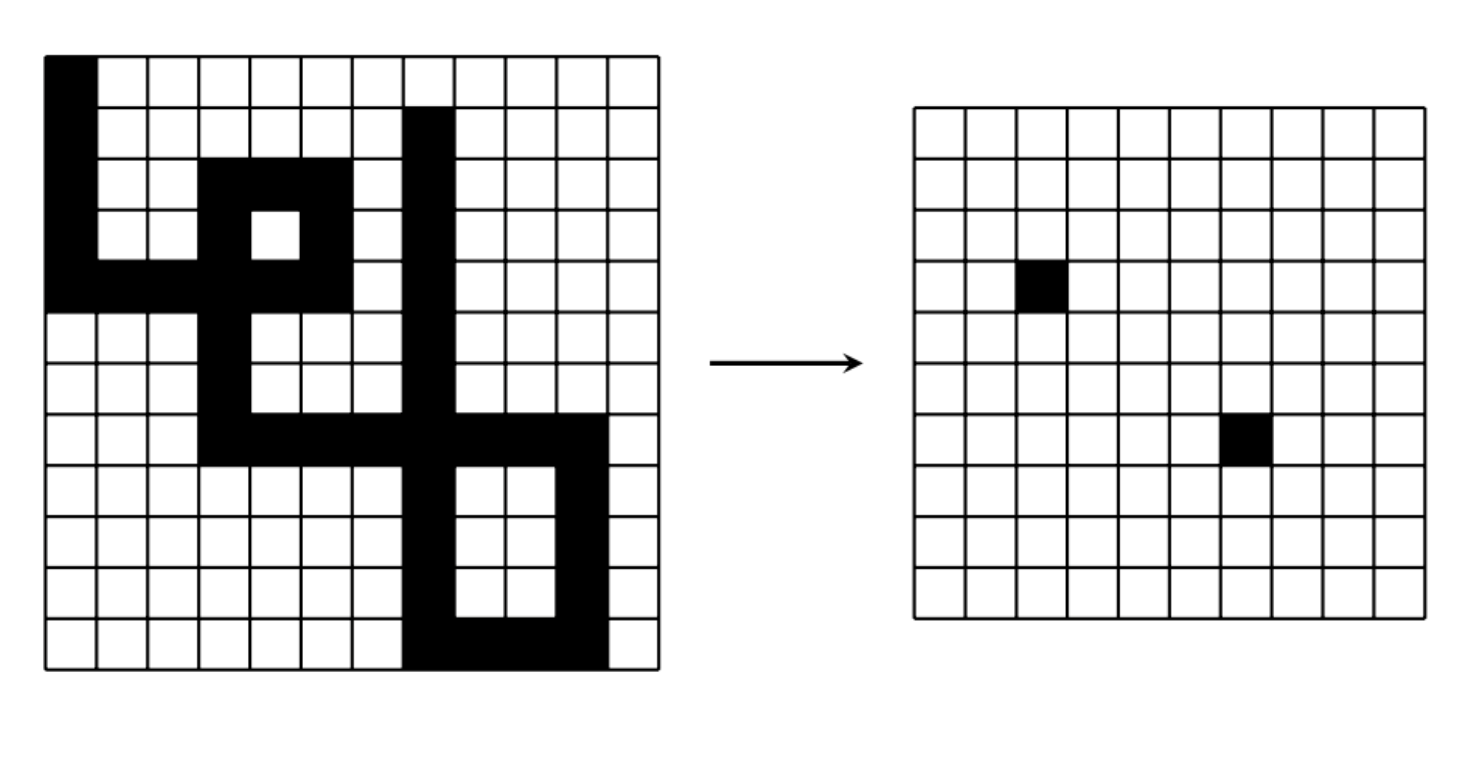
“Rainbow Rose” by INTVGene, licensed under CC BY-SA 2.0. Modified from the original.
Math 362. Matrix Methods for Machine Learning
This course will give students a deep understanding of the linear algebra that drives modern machine learning and artificial intelligence systems. The focus of this course is on theory, and we will use mathematical rigor and proofs to understand how and why the algorithms we study work.
In this course, we will:
- Build geometric intuition for high-dimensional spaces through the study of norms, orthogonality, projections, matrix subspaces, matrix norms, and rank.
- Discuss real-world data problems, covering regression and the least-squares method through matrix factorizations.
- Cover spectral theory and the Singular Value Decomposition (SVD)
- Discuss how Principal Component Analysis and SVD are used to compress large datasets, reduce noise, and extract important features using low-rank approximations.
- Study network data, using spectral graph theory and graph Laplacians to cluster data and identify structure.
While the course focuses on the matrix methods underlying real-world machine learning algorithms, we will also discuss how these concepts are used in supervised classification, latent factor models, recommender systems, and other applications.
Students interested in enrolling in Math 362 should be comfortable reading and writing mathematical proofs and should have completed a linear algebra course at the level of Math 240-0 or equivalent. Students can receive credit for both Math 362 and Math 334.
Math 364. Mathematical Foundations of Deep Learning
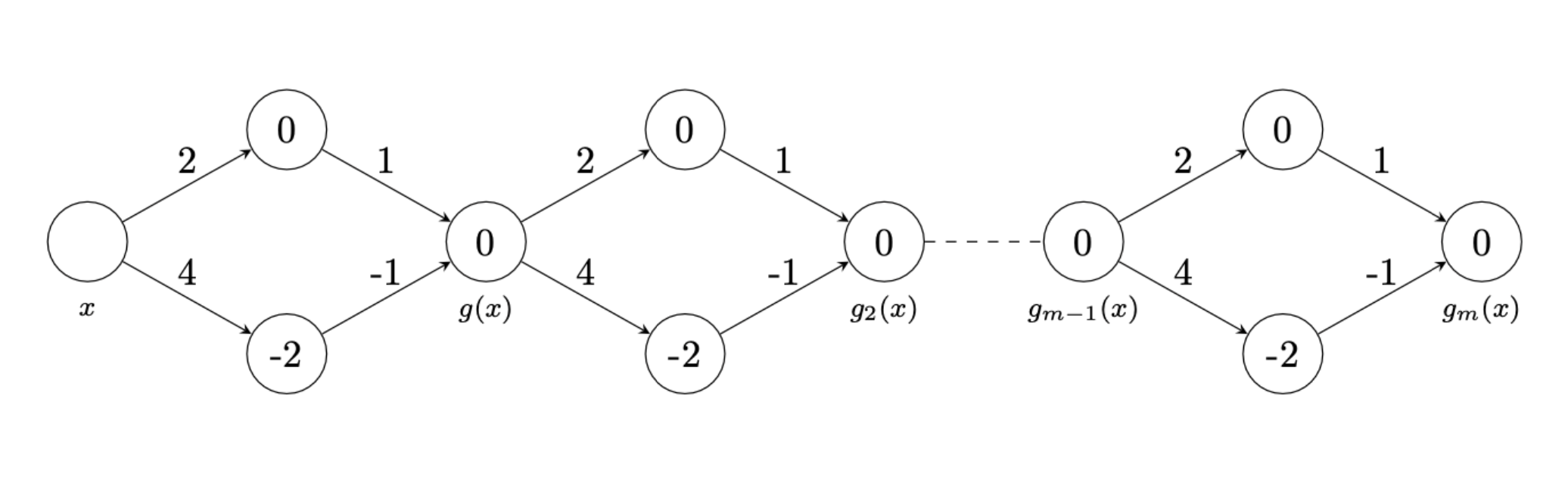
This course offers a proof-based introduction to the mathematical foundations of deep learning. We will treat neural networks as mathematical objects and develop theorems aimed at understanding how network architecture affects expressive power and training behavior.
Topics will include:
- Feedforward neural networks with commonly used activation functions and mathematical techniques for constructing and combining networks.
- Gradient descent and the analysis of important phenomena that arise during training.
- The Universal Approximation Theorem for shallow neural networks and its proof.
- The effect of depth on expressive power, explored through explicit examples and theoretical results.
- The mathematical structure of architectures such as residual networks, convolutional neural networks, and self-attention mechanisms.
This is a rigorous mathematics course centered on definitions, examples, and proofs; it does not include a coding component. Students should be comfortable reading and writing mathematical proofs and should have a basic knowledge of real analysis. The prerequisite is MATH 320-1 (Real Analysis) or MATH 321-1 (MENU: Real Analysis).